
Diamonds have always represented love, commitment, elegance, and timeless beauty. Whether you’re buying an engagement ring, investing in fine jewelry, or simply exploring your options, one question is becoming increasingly common:
Should you choose a natural diamond or a lab-grown diamond?
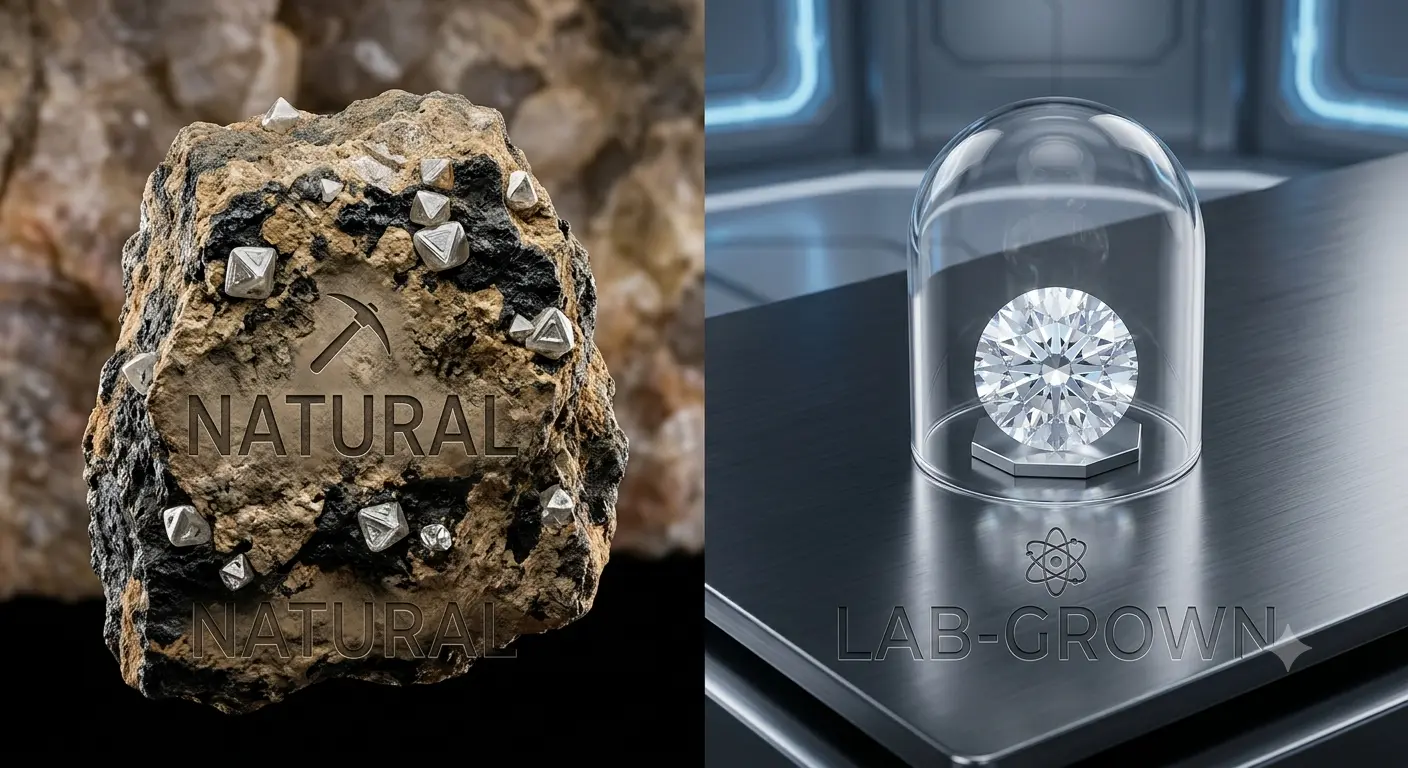
At first glance, they look identical. Both sparkle beautifully, both are genuine diamonds, and both can receive certification from leading gemological laboratories. However, they differ in their origin, value, price, rarity, and long-term benefits.
This Natural vs. Lab-Grown Diamonds: Complete Comparison will help you understand every major difference so you can confidently choose the diamond that matches your budget, preferences, and future goals.

Table of Contents
What Is a Natural Diamond?
A natural diamond is formed deep beneath the Earth’s surface under extreme heat and pressure over 1 to 3 billion years. These rare gemstones are brought closer to the surface through volcanic eruptions before being mined.
Each natural diamond is a remarkable creation of nature, making every stone unique in its own way.
Key Features of Natural Diamonds
- Created naturally inside the Earth
- Billions of years old
- Extremely rare
- High sentimental and emotional value
- Generally higher resale potential
- Certified by reputed gemological laboratories
Natural diamonds are often viewed as symbols of permanence and rarity, making them a preferred choice for engagement rings and heirloom jewelry.
What Is a Lab-Grown Diamond?
A lab-grown diamond, also called a synthetic or man-made diamond, is produced inside a laboratory using advanced technology that recreates the natural diamond formation process.
Although they are created in a controlled environment, they possess the same physical, chemical, and optical properties as natural diamonds.
Lab-grown diamonds are real diamonds, not fake or imitation stones.
Key Features of Lab-Grown Diamonds
- Created in laboratories
- Same crystal structure as natural diamonds
- Less expensive
- Environmentally controlled production
- Available in larger sizes at lower prices
- Certified just like natural diamonds
Are Lab-Grown Diamonds Real Diamonds?
Yes.
This is one of the biggest misconceptions among buyers.
Lab-grown diamonds are genuine diamonds. They are not cubic zirconia, moissanite, or glass.
Both natural and lab-grown diamonds consist entirely of carbon atoms arranged in the same crystal structure.
The only real difference is where they were formed.
- Natural diamonds formed inside the Earth.
- Lab-grown diamonds formed inside a laboratory.
Even professional jewelers often require specialized equipment to distinguish them.
Natural vs. Lab-Grown Diamonds: Complete Comparison
| Feature | Natural Diamond | Lab-Grown Diamond |
| Formation | Inside the Earth | Created in laboratory |
| Age | 1–3 billion years | Several weeks |
| Composition | Carbon | Carbon |
| Hardness | 10 (Mohs Scale) | 10 (Mohs Scale) |
| Appearance | Identical | Identical |
| Sparkle | Same | Same |
| Durability | Excellent | Excellent |
| Price | Higher | 30–70% Lower |
| Rarity | Very Rare | Easily Produced |
| Resale Value | Generally Better | Usually Lower |
| Investment Potential | Higher | Limited |
Appearance: Can You Tell the Difference?
One of the most surprising facts is that you cannot distinguish a natural diamond from a lab-grown diamond simply by looking at it.
Both exhibit:
- Brilliant sparkle
- Exceptional fire
- High clarity
- Beautiful brilliance
Even experienced jewelers often use advanced laboratory equipment to identify the diamond’s origin.
For everyday buyers, there is virtually no visible difference.
Price Comparison
Price is one of the biggest reasons buyers consider lab-grown diamonds.
A lab-grown diamond typically costs 30% to 70% less than a natural diamond of similar size and quality.
For example:
- A 1-carat natural diamond may cost significantly more than a comparable lab-grown diamond.
- With the same budget, buyers can often purchase a larger or higher-quality lab-grown diamond.
If maximizing size and quality within a fixed budget is your priority, lab-grown diamonds are an attractive option.

Which Diamond Has Better Quality?
Quality depends on the 4Cs:
- Cut
- Color
- Clarity
- Carat
Both natural and lab-grown diamonds are graded using the same standards.
A well-cut lab-grown diamond can appear just as stunning as an equally well-cut natural diamond.
Rather than focusing solely on origin, buyers should carefully evaluate the 4Cs before making a purchase.
Internal Link Suggestion: Read our guide on How Do You Test a Diamond?
Durability and Hardness
When comparing durability, there is virtually no difference.
Both diamonds score 10 on the Mohs Hardness Scale, making them the hardest natural material known.
This means both are suitable for:
- Daily wear
- Engagement rings
- Wedding bands
- Luxury jewelry
With proper care, both can last for generations.

Which Diamond Holds Its Value Better?
This is where the biggest difference appears.
Natural diamonds generally retain their value better because they are rare and naturally limited.
Lab-grown diamonds have become easier and less expensive to manufacture over time, causing prices to decline in many markets.
If long-term resale or investment value matters to you, natural diamonds generally have an advantage.
Environmental Considerations
Many buyers choose lab-grown diamonds because they believe they have a lower environmental impact.
While lab-grown diamonds avoid traditional mining, their production still requires significant energy.
Natural diamonds involve mining, but many modern mining companies now follow stricter environmental and ethical standards.
Instead of assuming one option is always greener, it’s wise to research the sourcing practices and certifications of the seller.
Ethical Considerations
Ethical sourcing has become an important factor for today’s consumers.
Reputable jewelers offer:
- Conflict-free natural diamonds
- Responsibly sourced diamonds
- Certified lab-grown diamonds
Always ask for proper certification and sourcing information before making a purchase.
Certification Matters
Whether you choose a natural or lab-grown diamond, certification is essential.
A certified diamond gives confidence in its:
- Authenticity
- Quality
- Grading
- Characteristics
Look for certificates from recognized gemological laboratories.
MORE ABOUT DIAMOND TEST
Who Should Choose a Natural Diamond?
A natural diamond may be the right choice if you:
Value rarity
Natural diamonds are limited in supply and formed over billions of years.
Want stronger resale potential
Although resale prices vary, natural diamonds generally perform better.
Prefer traditional symbolism
Many buyers appreciate the history and emotional significance of owning something created by nature.
Plan to create a family heirloom
Natural diamonds are often passed from generation to generation.
Who Should Choose a Lab-Grown Diamond?
A lab-grown diamond may be ideal if you:
Want maximum value for money
You can often purchase a larger or higher-quality stone for the same budget.
Prioritize appearance over rarity
Since both diamonds look nearly identical, many buyers focus on visual beauty.
Have a fixed budget
Lab-grown diamonds provide more flexibility without sacrificing sparkle.
Want modern technology
Some buyers appreciate the innovation behind laboratory-grown diamonds.
Pros and Cons of Natural Diamonds
Pros
- Rare and unique
- Strong emotional value
- Better resale potential
- Long history of appreciation
- Excellent durability
Cons
- Higher price
- Limited availability for certain specifications
- Mining-related environmental considerations
Pros and Cons of Lab-Grown Diamonds
Pros
- More affordable
- Excellent brilliance
- Same physical properties as natural diamonds
- Larger sizes within budget
- Widely available
Cons
- Lower resale value
- Less rarity
- Prices may continue to decrease over time
Common Myths About Lab-Grown Diamonds
Myth 1: They are fake.
False. Lab-grown diamonds are genuine diamonds.
Myth 2: They sparkle less.
False. Sparkle depends primarily on cut quality, not origin.
Myth 3: They are softer.
False. Both have the same hardness rating of 10.
Myth 4: They cannot be certified.
False. Lab-grown diamonds can receive professional grading and certification.
How to Choose the Right Diamond
Before making a purchase, ask yourself these questions:
- What is my budget?
- Is rarity important to me?
- Do I care about resale value?
- Am I buying for investment or personal enjoyment?
- Would I prefer a larger diamond or a naturally rare one?
There is no universal “best” option. The right diamond is the one that aligns with your priorities.
Final Verdict: Natural vs. Lab-Grown Diamonds
The debate between natural and lab-grown diamonds isn’t about determining which one is universally better—it’s about understanding which one is better for you.
Natural diamonds offer unmatched rarity, a fascinating geological history, and stronger long-term value, making them ideal for those who appreciate tradition and lasting significance.
Lab-grown diamonds, on the other hand, provide exceptional beauty at a more accessible price, allowing buyers to enjoy larger or higher-quality stones without exceeding their budget.
Whichever option you choose, always buy from a trusted jeweler, insist on proper certification, and focus on the diamond’s quality rather than marketing claims. A well-chosen diamond—natural or lab-grown—can be a meaningful and lasting symbol of life’s most important moments.
Frequently Asked Questions (FAQs)
1. Are lab-grown diamonds real diamonds?
Yes. They have the same chemical, physical, and optical properties as natural diamonds.
2. Which is more expensive: natural or lab-grown diamonds?
Natural diamonds are generally more expensive because they are rare and formed naturally over billions of years.
3. Can anyone tell the difference between natural and lab-grown diamonds?
Not by sight alone. Specialized gemological equipment is typically required to identify their origin.
4. Which diamond is better for investment?
Natural diamonds generally have better long-term resale and investment potential, though market performance can vary.
5. Do lab-grown diamonds last forever?
Yes. Like natural diamonds, lab-grown diamonds are extremely durable and suitable for everyday wear.
6. Are lab-grown diamonds environmentally friendly?
They avoid mining, but manufacturing requires significant energy. The overall environmental impact depends on production methods and sourcing practices.
7. Should I buy a natural or lab-grown diamond?
Choose a natural diamond if you value rarity, tradition, and potential resale value. Choose a lab-grown diamond if you want a larger or higher-quality stone within your budget.


