
Choosing the perfect gemstone is one of the most exciting parts of buying jewelry. Whether you’re shopping for an engagement ring, a meaningful gift, or your first piece of fine jewelry, you’ll likely come across two popular options: moissanite and diamond.
At first glance, they can look surprisingly similar. Both sparkle beautifully, both are durable enough for everyday wear, and both are available in a variety of cuts and sizes. However, they are not the same gemstone.
So, Moissanite vs. Diamond: Which One Should You Buy?
The answer depends on what matters most to you. Is it brilliance, durability, price, rarity, long-term value, or tradition?
In this complete guide, we’ll compare moissanite and diamonds in every important category, helping you make a confident and informed decision.

Table of Contents
What Is a Diamond?
A diamond is a naturally occurring gemstone made entirely of carbon atoms arranged in a crystal structure. Formed deep beneath the Earth’s surface under immense heat and pressure over billions of years, diamonds are known for their exceptional hardness, rarity, and timeless appeal.
Today, diamonds are available in two main types:
- Natural diamonds
- Lab-grown diamonds
Both are real diamonds and share the same physical and chemical properties.
Diamonds have long been associated with love, commitment, and luxury, making them the most popular choice for engagement rings worldwide.
What Is Moissanite?
Moissanite is a gemstone composed of silicon carbide. It was first discovered in a meteor crater by French scientist Henri Moissan in 1893. Because natural moissanite is extremely rare, nearly all moissanite available today is created in laboratories.
Unlike cubic zirconia, moissanite is a high-quality gemstone in its own right. It isn’t an imitation diamond—it has unique properties, exceptional sparkle, and impressive durability.
Its growing popularity comes from offering remarkable beauty at a much lower price than diamonds.
Moissanite vs. Diamond: Quick Comparison
| Feature | Diamond | Moissanite |
| Composition | Carbon | Silicon Carbide |
| Hardness | 10 Mohs | 9.25 Mohs |
| Brilliance | High | Very High |
| Fire (Rainbow Sparkle) | Moderate | Extremely High |
| Price | Higher | Much Lower |
| Rarity | Rare | Lab-Created |
| Resale Value | Better | Limited |
| Scratch Resistance | Excellent | Excellent |
| Daily Wear | Yes | Yes |
Appearance: Can You Tell the Difference?
Many people cannot distinguish moissanite from a diamond without specialized equipment.
Both gemstones appear:
- Bright
- Colorless (depending on grade)
- Elegant
- Luxurious
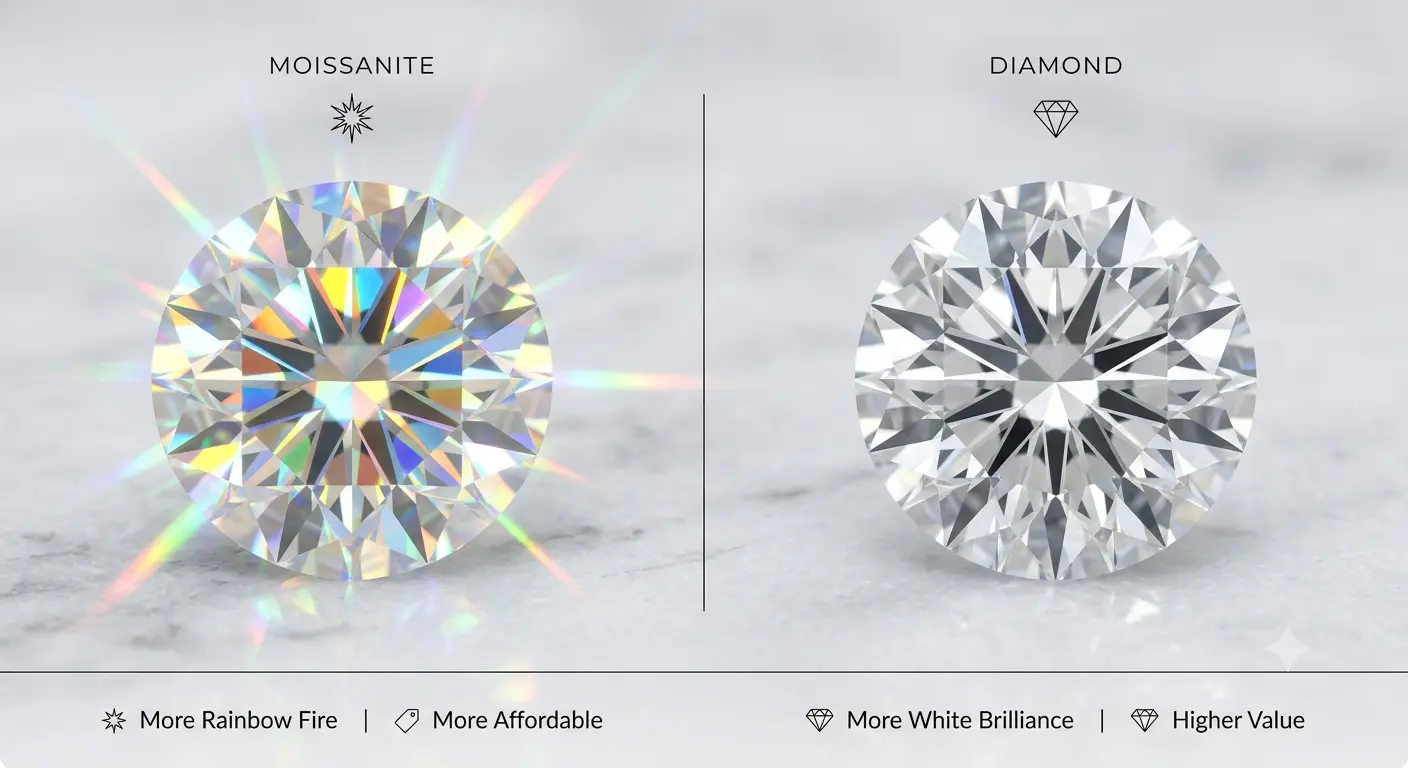
However, under certain lighting conditions, moissanite reflects more colorful flashes of light than diamonds.
Diamond Sparkle
Diamonds produce a balanced combination of:
- White light
- Colored flashes
- Bright brilliance
This elegant sparkle is one reason diamonds have remained popular for centuries.
Moissanite Sparkle
Moissanite produces more fire than diamonds, creating vibrant rainbow flashes.
Some people love this dramatic sparkle, while others prefer the more subtle brilliance of diamonds.
This is largely a matter of personal taste.
Durability: Which Stone Lasts Longer?
Durability is essential for jewelry worn every day.
Diamond
Diamonds rank 10 on the Mohs Hardness Scale, making them the hardest natural material known.
They resist scratches exceptionally well and can maintain their beauty for generations with proper care.
Moissanite
Moissanite ranks 9.25 on the Mohs scale, making it one of the hardest gemstones available.
It is highly resistant to scratches, chips, and everyday wear.
For practical purposes, both stones are excellent choices for rings, earrings, necklaces, and bracelets.
Brilliance and Fire
Brilliance refers to the amount of white light reflected by a gemstone.
Fire refers to the colorful flashes produced when light passes through the stone.
Diamond
- Elegant sparkle
- Natural brilliance
- Balanced appearance
Moissanite
- Exceptional fire
- More rainbow flashes
- Eye-catching brilliance
If you enjoy bold sparkle, moissanite may appeal to you more.
If you prefer a classic and refined appearance, diamonds often remain the favorite.
Price Comparison
One of the biggest differences is price.
Moissanite costs significantly less than diamonds.
For the same budget, buyers can often purchase:
- A larger moissanite
- Better clarity
- Higher color grade
- Premium settings
Diamonds, especially natural diamonds, command higher prices because of their rarity and market demand.
If affordability is your top priority, moissanite offers outstanding value.
Which One Is More Valuable?
Diamonds generally retain more value than moissanite.
Natural diamonds have established markets, stronger brand recognition, and better resale opportunities.
Moissanite, while beautiful, usually has limited resale value because it is widely available and relatively inexpensive.
If long-term value is important, diamonds have the advantage.

Ethical and Environmental Considerations
Modern buyers often consider sustainability alongside beauty and price.
Most moissanite is laboratory-created, avoiding traditional mining.
Natural diamonds require mining, although many companies now follow responsible sourcing practices and ethical standards.
If sustainability is important to you, research the retailer’s sourcing policies and certifications before making a purchase.
Maintenance and Cleaning
Fortunately, both gemstones are easy to maintain.
To keep them sparkling:
- Clean regularly with warm water and mild soap.
- Use a soft brush to remove dirt and oils.
- Store jewelry separately to avoid scratches.
- Have the setting inspected periodically by a professional jeweler.
Routine care helps preserve the beauty of both moissanite and diamonds for years.
Who Should Buy a Diamond?
A diamond is an excellent choice if you:
Value tradition
Diamonds have symbolized love and commitment for centuries.
Want long-term value
Natural diamonds generally offer better resale potential.
Prefer understated elegance
Their balanced sparkle appeals to buyers seeking a timeless look.
Appreciate rarity
Natural diamonds are formed over billions of years, making each stone unique.
Who Should Buy Moissanite?
Moissanite is a great option if you:
Have a limited budget
You can purchase a larger gemstone for significantly less money.
Love maximum sparkle
Its colorful fire creates an eye-catching appearance.
Want everyday durability
Its high hardness makes it suitable for daily wear.
Prefer modern alternatives
Many buyers appreciate moissanite as an affordable, ethical option.
Pros and Cons of Diamonds
Pros
- Extremely durable
- Timeless beauty
- Better resale value
- Rare and prestigious
- Classic engagement ring choice
Cons
- Expensive
- Natural stones can be difficult to source in certain qualities
- Higher insurance costs for valuable pieces
Pros and Cons of Moissanite
Pros
- Affordable
- Exceptional brilliance
- Durable enough for daily wear
- Available in larger sizes
- Low maintenance
Cons
- Lower resale value
- Rainbow sparkle may not suit everyone’s taste
- Less traditional than diamonds
Common Myths About Moissanite
Myth 1: Moissanite is fake.
False.
Moissanite is a genuine gemstone with its own mineral composition.
Myth 2: Nobody can tell the difference.
Mostly true.
Without specialized equipment, many people cannot distinguish high-quality moissanite from diamonds.
Myth 3: Moissanite scratches easily.
False.
With a hardness of 9.25, moissanite is one of the most durable gemstones available.
Myth 4: Moissanite becomes cloudy over time.
False.
High-quality moissanite retains its brilliance and does not permanently become cloudy with normal wear. Regular cleaning helps remove surface oils and dirt that can temporarily reduce sparkle.
How to Choose Between Moissanite and Diamond
Before making your decision, consider these questions:
What is your budget?
If you’re looking to maximize size and sparkle without overspending, moissanite offers exceptional value.
Is tradition important?
Diamonds have a long history as the preferred gemstone for engagement rings and milestone jewelry.
Do you care about resale value?
Natural diamonds generally have stronger resale potential than moissanite.
Which sparkle do you prefer?
Choose a diamond if you like a balanced, classic brilliance.
Choose moissanite if you enjoy bold, colorful flashes of light.
How often will you wear it?
Both gemstones are durable enough for everyday wear, making either a practical choice for rings and other frequently worn jewelry.
Expert Buying Tips
- Compare gemstones under natural and indoor lighting.
- Choose the best cut your budget allows, as cut has a major impact on sparkle.
- Buy from a trusted jeweler with transparent policies.
- Request a grading report or certificate when applicable.
- Focus on overall quality rather than size alone.
Read our guide on How Do You Test a Diamond?
Explore Natural vs. Lab-Grown Diamonds: Complete Comparison
Final Verdict: Moissanite vs. Diamond—Which One Should You Buy?
When comparing Moissanite vs. Diamond: Which One Should You Buy?, there isn’t a single answer that fits everyone.
If you value rarity, tradition, long-term value, and timeless elegance, a diamond remains the classic choice. Its unmatched reputation and enduring appeal continue to make it the preferred gemstone for many buyers.
On the other hand, if your goal is to maximize beauty while staying within budget, moissanite offers incredible brilliance, impressive durability, and outstanding value. It allows you to enjoy a stunning gemstone without the higher price associated with diamonds.
Ultimately, the best choice is the one that aligns with your priorities, lifestyle, and budget. Whether you choose a diamond or moissanite, selecting a high-quality stone from a trusted jeweler will ensure your jewelry remains beautiful for years to come.
Frequently Asked Questions (FAQs)
1. Is moissanite a real gemstone?
Yes. Moissanite is a genuine gemstone made from silicon carbide and is not an imitation diamond.
2. Does moissanite sparkle more than a diamond?
Yes. Moissanite typically displays more colorful fire, while diamonds produce a more balanced and classic sparkle.
3. Which is more durable: moissanite or diamond?
Diamonds rank 10 on the Mohs scale, while moissanite ranks 9.25. Both are highly durable for everyday wear.
4. Is moissanite cheaper than diamonds?
Yes. Moissanite is significantly more affordable, allowing buyers to purchase larger stones for the same budget.
5. Which gemstone has better resale value?
Natural diamonds generally retain value better than moissanite, although resale prices can vary depending on market conditions and quality.
6. Can moissanite replace a diamond in an engagement ring?
Absolutely. Many couples choose moissanite for engagement rings because of its beauty, durability, and affordability.
7. Should I buy a moissanite or a diamond?
Choose a diamond if you value tradition, rarity, and potential resale value. Choose moissanite if you want exceptional sparkle, durability, and a lower purchase price.


